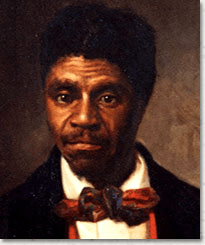
 Dred Scott was born into slavery and was the slave of an army surgeon, Dr. John Emerson. Scott had lived as Dr. Emerson’s slave on military bases in the free state of Illinois and in Wisconsin Territory, and finally in Missouri. After Emerson’s death in 1843, Scott sued for freedom from slavery for himself and his wife
During this time, the United States was expanding to include additional states and territories. This expansion heightened the conflict around the continued practice of slavery as states differed on the legitimacy of the institution. As the country expanded, the issue of slavery developed into a political juggernaut.
With the success of the Abolitionist Movement in the United States and abroad, global public opinion was turning against slavery. In the United States, while many states had legislated prohibitions against slavery, other states refused to delegitimize the barbarous institution. “In an effort to preserve the balance of power in Congress between slave and free states, the Missouri Compromise was passed in 1820 admitting Missouri as a slave state and Maine as a free state.” At the height of this conflict, the resolution of Scott’s case became a focal point for this larger political battle between so-called Free States and Slave States and a precursor to the Civil War.
In this context, in 1853, Dred Scott sued John Sanford (his subsequent slave-owner) in federal court, for his freedom. In order to be heard in federal court, under Diversity Jurisdiction, Scott argued that he was a citizen of Illinois. On this basis, Scott sued for his freedom. Scott’s claims were denied; Scott appealed to the Supreme Court of the United States. Leaving aside the questions Scott brought forward on appeal, the majority opinion framed the main issue as whether the Court had jurisdiction to try the case, basing the answer to this question on whether Scott could be considered a citizen. The question of citizenship and questions of the law governing Scott’s condition of slavery led to the court addressing questions of federalism and state rights, as well.
Majority Opinion:
In a 7-2 decisions, the Supreme Court found that it lacked subject-matter jurisdiction because Scott was not a “citizen” in the relevant sense of the term. In the obiter dictum, the decision deemed the Missouri Compromise of 1820 unconstitutional and foreclose Congress from freeing slaves within Federal territories.
Invoking originalism, Chief Justice Robert Tanney argued:
- The framers did not intend the phrase “all men are created equal” to apply to all men/peoples.
- The Constitution recognizes “the right of property of the master in a slave, and makes no distinction between that description of property and other property.”(page 451)
- The laws of a State alone could decide upon the domestic and social condition of the persons domiciled within its territory, except so far as the powers of the states in this respect are restrained or duties and obligations imposed upon them by the Constitution of the United States. Such social conditions include the status or condition of a slave. Strader et al. v. Graham
- Under the Doctrine of Eminent Domain, the “taking” of property is limited by the Due Process Requirements of the Fifth Amendment:“an act of Congress which deprives a citizen of the United States of his liberty or property merely because he came himself or brought his property into a particular Territory of the United States, and who had committed no offence against the laws, could hardly be dignified with the name of due process of law.” (page 450)
Concurring Opinions:
Justice Samuel Nelson agreed with the outcome of the majority opinion in this case but found that . However, he disagreed with the reasoning. For Justice Nelson, it was not a question of eminent omain and due process. It was a question of state rights and federalism that should be determined in accordance with the governing state law.
“Our conclusion therefore is, upon this branch of the case, that the question involved is one depending solely upon the law of Missouri, and that the Federal court sitting in the State and trying the case before us was bound to follow it.” (page 465)
“These principles fully establish that it belongs to the sovereign State of Missouri to determine by her laws the question of slavery within her jurisdiction, subject only to such limitations as may be found in the Federal Constitution, and further that the laws of other States of the Confederacy, whether enacted by their Legislatures or expounded by their courts, can have no operation within her territory or affect rights growing out of her own laws on the subject. This is the necessary result of the independent and sovereign character of the State. The principle is not peculiar to the State of Missouri, but is equally applicable to each State belonging to the Confederacy. The laws of each have no extraterritorial operation within the jurisdiction of another except such as may be voluntarily conceded by her laws or courts of justice.” (page 461)
Justice John Catron found that while it was possible that Scott had acquired property in himself, and became free, by being kept in Illinois during two years, ultimately, Scott’s domicile depended on his master’s domicile.
“Unless the master becomes an inhabitant of that State, the slaves he takes there do not acquire their freedom, and if they return with their master to the slave State of his domicil, they cannot assert their freedom after their return.” (page 519)
Dissenting Opinions:
Justice John McLean dissented. He found that Scott, ” Being a freeman, and having his domicil in a State different from that of the defendant, he is a citizen within the act of Congress, and the courts of the Union are open to him.” (page 531) Directly contradicting Tanney, he argued, on Originalist terms, that the framers did not intend for race to be a bar to citizenship, stating, for example, that at the time of the ratification of the Constitution, black men could vote in five of the thirteen states. He rejected the categorization of slaves as chattel or property: “A slave is not a mere chattel. He bears the impress of his Maker, and is amenable to the laws of God and man, and he is destined to an endless existence.” (page 550) Furthermore, he challenged the institution of slavery, writ large: “But if we are to turn our attention to the dark ages of the world, why confine our view to colored slavery? On the same principles, white men were made slaves. All slavery has its origin in power, and is against right.” (page 538)
Justice Benjamin Curtis found:
- “That the free native-born citizens of each State are citizens of the United States.”
- “That, as free colored persons born within some of the States are citizens of those States, such persons are also citizens of the United States.” (page 589)
- “That every such citizen, residing in any State, has the right to sue and is liable to be sued in the Federal courts, as a citizen of that State in which he resides.”
- “That, as the plea to the jurisdiction in this case shows no facts, except that the plaintiff was of African descent, and his ancestors were sold as slaves, and as these facts are not inconsistent with his citizenship of the United States and his residence in the State of Missouri, the plea to the jurisdiction was bad, and the judgment of the Circuit Court overruling it was correct.”
- “The laws of the United States, in operation in the Territory of Wisconsin at the time of the plaintiff’s residence there, did act directly on the status of the plaintiff, and change his status to that of a free man.” (page 601)
- “The plaintiff and his wife were capable of contracting, and, with the consent of Dr. Emerson, did contract a marriage in that Territory, valid under its laws, and the validity of this marriage cannot be questioned in Missouri, save by showing that it was in fraud of the laws of that State or of some right derived from them, which cannot be shown in this case, because the master consented to it.”
- “That the consent of the master that his slave, residing in a country which does not tolerate slavery, may enter into a lawful contract of marriage, attended with the civil rights and duties which being to that condition, is an effectual act of emancipation. And the law does not enable Dr. Emerson, or anyone claiming under him, to assert a title to the married persons as slaves, and thus destroy the obligation of the contract of marriage and bastardize their issue and reduce them to slavery.”
“I dissent, therefore, from that part of the opinion of the majority of the court in which it is held that a person of African descent cannot be a citizen of the United States, and I regret I must go further and dissent both from what I deem their assumption of authority to examine the constitutionality of the act of Congress commonly called the Missouri Compromise.” (Page 60 U. S. 589)
Relevant Links:
- OYEZ summary: Dred Scott v. Sandford, 60 U.S. 393 (1857)
- CASE SQUIB: Dred Scott v. Sandford, 60 U.S. 393 (1857)
- Extended Case: Dred Scott v. Sandford, 60 U.S. 393 (1857)
- Missouri Compromise of 1820
 Informed Citizens. Accountable Power.
Leave a comment