What is Equality?
Agenda:
- Administrative Matters (5 minutes)
- Updates on the website
- Updates on the American Constitution Society
- Between the Civil War and World War II: The Battle for Equal Protection in America (10 minutes)
- Quick Review of Dred Scott v. Sandford, 60 U.S. 393 (1857)
- The Gettysburg Address
- The Civil War and the Reconstruction Amendments
- The Fourteenth Amendment (30 minutes)
- Origins
- Evolution
- Bradwell v. the State (1872)
- The Slaughter-House Cases (14 Apr 1873)
- Strauder v. West Virginia (1880)
- Civil Rights Cases (1883)
- Santa Clara County v. Southern Pacific Railroad Company (1886)
- Yick Wo v. Hopkins (1886)
- Plessy v. Ferguson (1896)
- Cumming v. Richmond County Board of Edu cation (1899)
- Missouri ex rel. gaines v. Canada (1938)
- Brown v. Board of Education (1954)
- Brown v. Board of Education of Topeka, 349 U.S. 294 (1955) [Brown II]
- Theodore Roosevelt and a New Vision for American World Leadership
- The Impact of World War II on domestic law in the United States
- Tiers of Scrutiny (Part I) (20 minutes)
- Equality Today: A current view from the women’s movement (25 minutes)
Assigned Materials:
View:
The Civil War
The Fourteenth Amendment
Equal Protection and Tiers of Scrutiny:
Read:
Questions to Consider:
- What did equality mean before the civil war? For states? For men? For people?
- How did the Abolitionist Movement and the diverse Native American traditions shape the evolution of the concept of equality?
- How did the civil war change the debate on equality, if it did at all?
- To whom did the Fourteenth Amendment apply initially?
- Is there truly such a thing as separate but equal?
- How did the end World War II force the development of internal laws and policies in the United States?
- What role did the new influx of Jewish refugees (including Albert Einstein) play in further development of the idea of equality?
- How did the case Brown v. Board of Education alter the American understanding of equality?
- What role did/does popular culture play in the legal understanding of equal protection?
- What does equal protection under the law mean?
- Does the clause mean everyone should be bound by the same laws, regardless of their individual circumstance, or that the law should provide equal protection based on individual circumstance, or that the impact of the law should always be the same for all people? How do we realize any or all of these objectives? Can we realize any or all of these objectives?
- Which approach is more desirable?
- What are the different aspects of equal treatment that one can legitimately take into account?
- Why does the court need to apply different levels of investigative force to different kinds of equality issues?
- Why does it take the U.S. Constitutional system so long to extend equal protection to women (of all races)?
- What are some of the ways in which ideas about equal protection can be improved?
- How and why is the concept of equal protection in constant evolution?
- What does equality mean today?
- Do we live in an equal society? Here in Germany? Across the world?
- Is America an equal society, after over two hundred years of efforts at attempting to build a nation on the principle of equality?
OPTIONAL Materials:
Reading:
Legal Materials:
- LEGISLATION: Civil Rights Act (1866) (WIKIPEDIA)
- LEGISLATION: Civil Rights Act (1964) (WIKIPEDIA)
- EXECUTIVE ORDER: President Andrew Johnson, Veto of the Civil Rights Act (March 277, 1866)
History:
- Sidney Blumenthal, From A Self-Made Man: The Political Life of Abraham Lincoln 1809-1849.
- The Civil War in Four Minutes: The War Between States (VIDEO)
- Black Panther Ten-Point Program (WIKIPEDIA)
- Official Theatrical Trailer: The Black Panthers: Vanguard of the Revolution
- Power to the People: The Rise of the Black Panther Party
- Declaration of Sentiments and Resolutions from Woman’s Rights Convention, Held at Seneca Falls (July 1848)
- History of the Fight for Women’s Rights
- Equal Rights Amendment (WIKIPEDIA)
- The Women’s March (OFFICIAL WEBSITE)
- The Women’s March (TWITTER ACCOUNT)
Scholarship:
- What is the meaning of the equal protection clause in the Fourteenth Amendment? (VIDEO)
- Equal Protection: How does it work? (VIDEO)
- Alexander M. Bickel, The Original Understanding and the Segregation Decision (1955). Faculty Scholarship Series. Paper 3972.
- Helen Mayer Hacker, WOMEN AS A MINORITY GROUP 30 Social Forces 60 (1951)
- Lillie Devereux Blake, Are Women a Class? (1870)
- Sojourner Truth, “Ain’t I a Woman?” (December 1851)
Literature:
Listening:
- PODCAST: Carlos Doesn’t Remember, Revisionist History
- PODCAST: Food Fight, Revisionist History
- PODCAST: American Pendulum Reprise, More Perfect (June 26, 2018) (Link for Download)
- PODCAST: Sex Appeal, More Perfect (November 23, 2017)
- PODCAST: Love-Episode 10, Washington Post Constitutional Podcast
- PODCAST: How to Stop Getting Screwed in the SCOTUS, Unladylike
- PODCAST: Episode 102: The Fourteenth Amendment, Civic101
Speeches:
- The Gettysburg Address (VIDEO)
- Eleanor Roosevelt, The Struggle for Human Rights, 1948 (VIDEO)
- Elie Wiesel, The Perils of Indifference (VIDEO)
Viewing:
- Robert Frank, The Americans (BOOK)
- Inside Robert Frank’s The Americans (VIDEO)
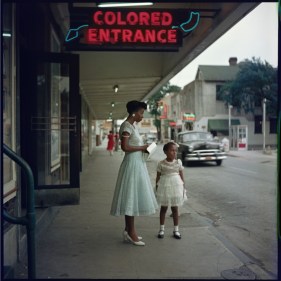
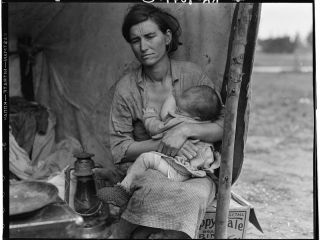
- The photographs of the Farm Security Administration – Office of War Information Photograph Collection (Government Sponsored Art Project)
- Walter Benjamin and Michael W. Jennings, The Work of Art in the Age of Its Technological Reproducibility [First Version] (2010) (ESSAY)
- A comparison of the African American Civil Rights Movement and Women’s Suffrage (Google Arts and Culture Project)
- Helen Levitt (BOOK)
- Notorious RGB (Blog)
 Informed Citizens. Accountable Power.
Leave a comment