Whitman v. American Trucking Assns., Inc., 531 U.S. 457 (2001)
JUSTICE SCALIA delivered the opinion of the Court. These cases present the following questions: (1) Whether § 109(b)(1) of the Clean Air Act (CAA) delegates legislative power to the Administrator of the Environmental Protection Agency (EP A). (2) Whether the Administrator may consider the costs of implementation in setting national ambient air quality standards (NAAQS) under § 109(b)(1). (3) Whether the Court of Appeals had jurisdiction to review the EPA’s interpretation of Part D of Title I of the CAA, 42 U. S. C. §§ 7501-7515, with respect to implementing the revised ozone NAAQS. (4) If so, whether the EPA’s…
Introduction to the Common Law Tradition
Slides from Session 1
February 6, 2019: America and International Law
“The [U.S.] Constitution is a charter of power granted by liberty,” not, as in Europe, “a charter of liberty…granted by power.” –James Madison writing in the National Gazette in 1792 Central Question: Is American democracy exceptional, at least in some respects? In what ways would these unique features of the legal system and its jurisprudence cause resistance from the US in the international sphere? What are realistic solutions to these problems? Key Terminology: Definition of a Treaty under International Law: Under international law a “treaty” is any international agreement concluded between states or other entities with international personality (such as…
January 16, 2019: Education Rights and Affirmative Action
Central Question: Is Affirmative Action in line with constitutional values? Key Terminology: Affirmative Action: Affirmative action policies are those in which an institution or organization actively engages in efforts to improve opportunities for historically excluded groups in American society to counter implicit bias that leads to reduced representation of members of these groups. Such programs are now mainly restricted to institutions of higher education. (Source) (Defined by the Supreme Court in Regents of the University of California v. Bakke 438 U.S. 265 (1978)) Judicial Review: The ability of a court to review, and potentially overturn, legislation or Executive actions that…
January 9, 2019: Immigration and the Government Shut Down
Central Question: Does the US Constitution support the construction of a border wall? And if so, are there limits on the basis for building a wall? Key Terminology: Government Shutdown: A government shutdown occurs when Congress fails to pass sufficient appropriation bills or continuing resolutions to fund federal government operations and agencies, or when the President refuses to sign into law such bills or resolutions. Appropriation Bills: A proposed law that authorizes the expenditure of government funds. It is a bill that sets money aside for specific spending that requires approval of the legislature for disbursement. National Emergency: A national…
Youngstown Sheet & Tube Co. v. Sawyer, 343 U.S. 579 (1952)
Decided June 2, 1952* 343 U.S. 579 CERTIORARI TO THE UNITED STATES COURT OF APPEALS FOR THE DISTRICT OF COLUMBIA CIRCUIT Syllabus To avert a nationwide strike of steel workers in April 1952, which he believed would jeopardize national defense, the President issued an Executive Order directing the Secretary of Commerce to seize and operate most of the steel mills. The Order was not based upon any specific statutory authority, but was based generally upon all powers vested in the President by the Constitution and laws of the United States and as President of the United States and Commander in…
Schedule for Discussions on Contemporary Events
Optional reading materials will be made available on StudIP. January 9, 2019: Immigration and the Government Shut Down Central Question: Does the Constitution support a demand for a border wall? And if so, at what cost? January 16, 2019: Education Rights Central Question: Is Affirmative Action in line with the US Constitution? January 23, 2019: Women’s Rights Central Question: What is the relationship between the Constitution and the demand for educational environments that allow women to feel safe? January 30, 2019: LGBT Rights and Dignity Central Question: What is the constitutional basis for marriage equality? February 6, 2019: America and International Law…
January 23, 2019: Women’s Rights
Central Question: What protection do women need for equality in educational settings?How does the Constitution (letter and spirit) guarantee equal protection under the law? What are the limits of the Constitution in this regard? Key Terminology: Intermediate Scrutiny: A term of Constitutional law which refers to a test used in some contexts to determine the constitutionality of a law. The challenged law must advance an important government interest by means that are substantially related to that interest in order to pass intermediate scrutiny.(Source) Equal Rights Amendment: The Equal Rights Amendment is a proposed amendment to the United States Constitution designed…
January 30, 2019: LGBT Rights and Dignity
Central Question: What is the scope of equal protection under the Constitution? What does marriage equality mean under the US Constitution? Within this scope, what kinds of personal choices are so central to individual dignity and autonomy that they should be guaranteed and protected by the state? Key Terminology: Sex-based Discrimination: Sex discrimination involves treating someone (an applicant or employee) unfavorably because of that person’s sex. Discrimination against an individual because of gender identity, including transgender status, or because of sexual orientation is discrimination because of sex in violation of Title VII. (Source) The Equal Employment Opportunity Commission (EEOC): An agency…
February 6, 2019: America & (versus) International Law
“The [U.S.] Constitution is a charter of power granted by liberty,” not, as in Europe, “a charter of liberty…granted by power.” — James Madison, writing in the National Gazette in 1792 Central Question: Is American democracy exceptional, at least in some respects? In what ways would these unique features of the legal system and its jurisprudence cause resistance from the US in the international sphere? What are realistic solutions to these problems? Key Terminology: Definition of a Treaty under International Law: Under international law a “treaty” is any international agreement concluded between states or other entities with international personality (such…
Session 8: Securing the Blessings of Liberty to ourselves and our Posterity
Agenda: Administrative Issues: (5 minutes) The Exam From the Last Session: (10 minutes) The Limits of the Commerce Clause Masterpiece Cakeshop, Ltd., et al. v. Colorado Civil Rights Commission et al The Second Amendment (30 minutes) United States v. Cruikshank, 92 U.S. 542 (1876) United States v. Miller, 307 U.S. 174 (1939) District of Columbia v. Heller, 554 U.S. 570 (2008) Substantive Due Process: (30 minutes) Meyer v. Nebraska, 262 U.S. 390 (1923) Skinnner v. Oklahoma ex rel. Williamson 316 US 535 (1942) Griswold v. Connecticut 381 US 479 (1965) Roe v. Wade 410 US 113 (1973) Assigned Materials The Second Amendment District of Columbia…
Masterpiece Cakeshop, Ltd., et al. v. Colorado Civil Rights Commission et al.
Syllabus Masterpiece Cakeshop, Ltd., is a Colorado bakery owned and operated by Jack Phillips, an expert baker and devout Christian. In 2012 he told a same-sex couple that he would not create a cake for their wedding celebration because of his religious opposition to same-sex marriages—marriages that Colorado did not then recognize—but that he would sell them other baked goods, e.g., birthday cakes. The couple filed a charge with the Colorado Civil Rights Commission (Commission) pursuant to the Colorado Anti-Discrimination Act (CADA), which prohibits, as relevant here, discrimination based on sexual orientation in a “place of business engaged in any sales to the…
Roe v. Wade, 410 U.S. 113 (1973)
Central Question: Does the Constitution protect a woman’s right to terminate her pregnancy by abortion? Decision: Yes, to some extent. The Court held that a woman’s right to an abortion fell within the right to privacy (recognized in Griswold v. Connecticut) protected by the Fourteenth Amendment. The decision gave a woman total autonomy over the pregnancy during the first trimester and defined different levels of state interest for the second and third trimesters. MR. JUSTICE BLACKMUN delivered the opinion of the Court. This Texas federal appeal and its Georgia companion, Doe v. Bolton, post, p. 179, present constitutional challenges to state criminal abortion legislation.…

District of Columbia v. Heller, 554 U.S. 570 (2008)
Central Question: Whether a District of Columbia prohibition on the possession of usable handguns in the home violates the Second Amendment to the Constitution. Decision: Yes. To read the Amendment as limiting the right to bear arms only to those in a governed military force would be to create exactly the type of state-sponsored force against which the Amendment was meant to protect people. District of Columbia law bans handgun possession by making it a crime to carry an unregistered firearm and prohibiting the registration of handguns; provides separately that no person may carry an unlicensed handgun, but authorizes the police chief to…
United States v. Miller, 307 U.S. 174 (1939)
Central Question: Does the Second Amendment protect an individual’s right to keep and bear a sawed-off double-barrel shotgun? Decision: No. The unanimous Court found that because possessing a sawed-off double barrel shotgun does not have a reasonable relationship to the preservation or efficiency of a well-regulated militia, the Second Amendment does not protect the possession of such an instrument. Decided May 15, 1939 Syllabus The National Firearms Act, as applied to one indicted for transporting in interstate commerce a 12-gauge shotgun with a barrel less than 18 inches long without having registered it and without having in his possession a stamp-affixed written order…
United States v. Cruikshank, 92 U.S. 542 (1875)
Background: During the Reconstruction Era after the 1872 Louisiana gubernatorial election political tension in Louisiana led to the Colfax massacre, in which an estimated 105 black people and 3 white people were killed after an armed militia of white Democrats attacked black Republican freedmen gathered to resist an attempt of Democratic takeover of Republican offices. Central Question: Should an indictment consisting of thirty-two counts against those involved in the Colfax Massacre for conspiracy under the sixth section of the Enforcement Act (16 Stat. 140) be upheld as valid? Decision: No. The scope of the Fourteenth Amendment is limited to protection against specifically identified state violations, and not directly against…
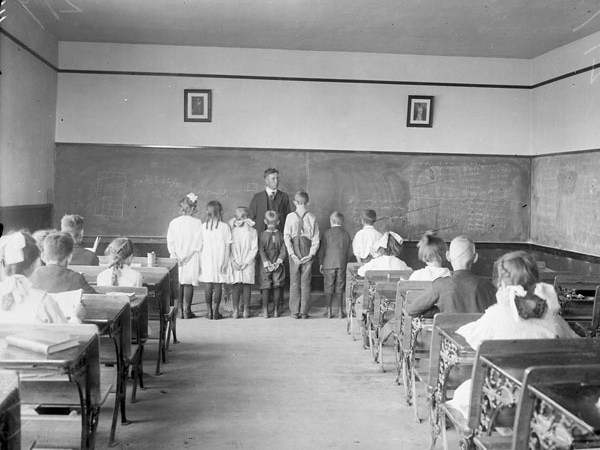
Meyer v. Nebraska, 262 U.S. 390 (1923)
Central Question: Did a Nebraska statute prohibiting schools from teaching any modern language, other than English, to children below the ninth grade violate the Fourteenth Amendment’s Due Process Clause? Decision: Yes, the statute violated the liberty interest protected by Due Process Clause of the Fourteenth Amendment, which includes the right of a teacher to teach German to a student, and the right of parents to control the upbringing of their child as they see fit. While the state has a legitimate interest in encouraging the growth of a population that can engage in discussions of civic matters, the means were not rationally related…

Griswold v. Connecticut 381 US 479 (1965)
Central Question: Does the Constitution protect the right of marital privacy against state restrictions on a couple’s ability to be counseled in the use of contraceptives? Decision: States cannot make the use of contraception by married couples illegal. A right to privacy can be inferred from several amendments in the Bill of Rights. As such, the Constitution protect the right of marital privacy against state restrictions on contraception. Connecticut’s birth control law unconstitutionally intrudes upon the right of marital privacy. Decided June 7, 1965 Syllabus Appellants, the Executive Director of the Planned Parenthood League of Connecticut, and its medical director, a licensed physician, were…
Skinnner v. Oklahoma ex rel. Williamson 316 US 535 (1942)
Central Question: Did the Oklahoma’s Criminal Sterilization Act of 1935 that allowed the state to sterilize a person who had been convicted three or more times of crimes “amounting to felonies involving moral turpitude” violate the Fourteenth Amendment? Decision: Yes. Given that individuals have fundamental rights to marriage and family, the Court applied strict scrutiny to find that Oklahoma classification of crimes that could result in the punishment of sterilization violated the Constitution’s Equal Protection guarantees. Decided June 1, 1942 Syllabus 1. A statute of Oklahoma provides for the sterilization, by vasectomy or salpingectomy, of “habitual criminals” — an habitual criminal being defined…
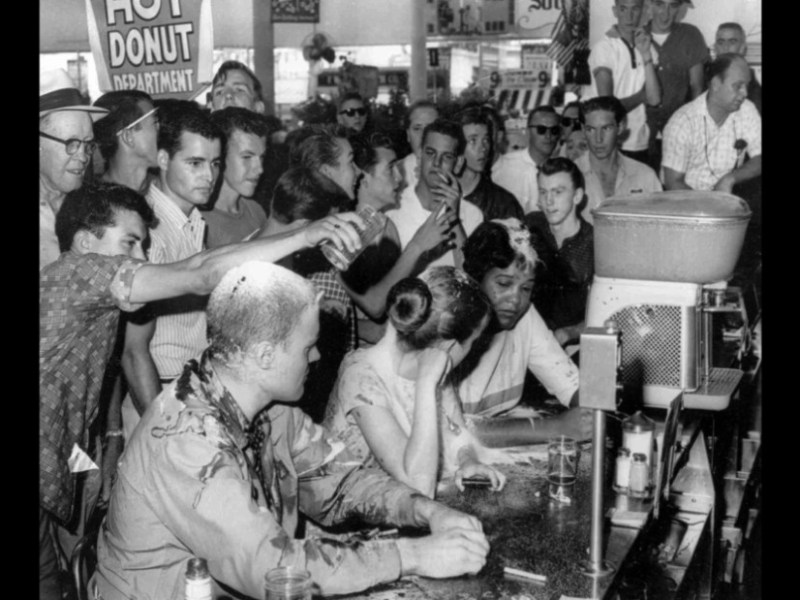
Katzenbach v. McClung, 379 U.S. 294 (1964)
Decided December 14, 1964 APPEAL FROM THE UNITED STATES DISTRICT COURT FOR THE NORTHERN DISTRICT OF ALABAMA Syllabus Appellees, whose restaurant in Birmingham, Alabama, caters to local white customers with take-out service for Negroes, serving food a substantial portion of which has moved in interstate commerce, sued to enjoin appellants from enforcing against their restaurant and others Title II of the Civil Rights Act of 1964, which they claimed was unconstitutional. A three-judge District Court granted an injunction, holding that there was no demonstrable connection between food purchased in interstate commerce and sold in a restaurant and Congress’ conclusion that…
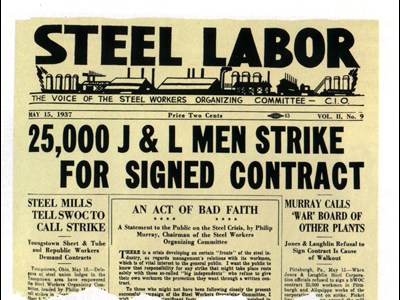
National Labor Relations Board v. Jones & Laughlin Steel Corp. (1937)
Syllabus The distinction between what is national and what is local in the activities of commerce is vital to the maintenance of our federal form of government. P. 301 U. S. 29. 2. The validity of provisions which, considered by themselves, are constitutional, held not affected by general and ambiguous declarations in the same statute. P. 301 U. S. 30. 3. An interpretation which conforms a statute to the Constitution must be preferred to another which would render it unconstitutional or of doubtful validity. P. 301 U. S. 30. 4. Acts which directly burden or obstruct interstate or foreign commerce, or its free flow, are…
Wickard v. Filburn, 317 U.S. 111 (1942)
Decided: November 9, 1942 MR. JUSTICE JACKSON delivered the opinion of the Court. The appellee filed his complaint against the Secretary of Agriculture of the United States, three members of the County Agricultural Conservation Committee for Montgomery County, Ohio, and a member of the State Agricultural Conservation Committee for Ohio. He sought to enjoin enforcement against himself of the marketing penalty imposed by the amendment of May 26, 1941,[n1] to the Agricultural Adjustment Act of 1938,[n2] upon that part of his 1941 wheat crop which was available for marketing in excess of the marketing quota established for his farm. He also sought…
Session 5: Promoting General Welfare: The Commerce Clause–The Limits of the Commerce Clause
Agenda: From the Last Session: (30 minutes) The Travel Ban The Commerce Clause: (15 minutes) United States v. E.C. Knight Company (1895) National Labor Relations Board v. Jones & Laughlin Steel Corp. (1937) United States v. Darby (1941) Wickard v. Filburn, 317 U.S. 111 (1942) Heart of Atlanta Motel, Inc. v. United States et al. (1964) Katzenbach v. McClung, 379 U.S. 294 (1964) Commerce Clause, the Debate on Gun Control and the Rational Basis Test: United States v. Lopez (1995) Assigned Materials The Commerce Clause How Interpretation of the Commerce Power Has Changed over Time The Commerce Clause and the Fourteenth Amendment Summary of…

Heart of Atlanta Motel, Inc. v. United States et al. (1964)
Decided December 14, 1964 APPEAL FROM THE UNITED STATES DISTRICT COURT FOR THE NORTHERN DISTRICT OF GEORGIA Syllabus Appellant, the owner of a large motel in Atlanta, Georgia, which restricts its clientele to white persons, three-fourths of whom are transient interstate travelers, sued for declaratory relief and to enjoin enforcement of the Civil Rights Act of 1964, contending that the prohibition of racial discrimination in places of public accommodation affecting commerce exceeded Congress’ powers under the Commerce Clause and violated other parts of the Constitution. A three-judge District Court upheld the constitutionality of Title II, §§ 201(a), (b)(1) and (c)(1),…
United States v. E.C. Knight Company (1895)
Decided January 21, 1895 (Page 156 U. S. 9) MR. CHIEF JUSTICE FULLER, after stating the facts in the foregoing language, delivered the opinion of the Court. By the purchase of the stock of the four Philadelphia refineries with shares of its own stock the American Sugar Refining Company acquired nearly complete control of the manufacture of refined sugar within the United States. The bill charged that the contracts under which these purchases were made constituted combinations in restraint of trade, and that in entering into them, the defendants combined and conspired to restrain the trade and commerce in refined…

Lochner v. New York, 198 U.S. 45 (1905)
Decided April 17, 1906 Syllabus The general right to make a contract in relation to his business is part of the liberty protected by the Fourteenth Amendment, and this includes the right to purchase and sell labor, except as controlled by the State in the legitimate exercise of its police power. Liberty of contract relating to labor includes both parties to it; the one has as much right to purchase as the other to sell labor. There is no reasonable ground, on the score of health, for interfering with the liberty of the person or the right of free contract,…
United States v. Darby (1941)
Decided February 3, 1941 APPEAL FROM THE DISTRICT COURT OF THE UNITED STATES FOR THE SOUTHERN DISTRICT OF GEORGIA Syllabus 1. The Fair Labor Standards Act of 1938 provides for fixing minimum wages and maximum hours for employees engaged in the production of goods for interstate commerce, with increased compensation for overtime, and forbids, under pain of fine and imprisonment: (1) violation by an employer of such wage and hour provisions; (2) shipment by him in interstate commerce of any goods in the production of which any employee was employed in violation of such provisions, and (3) failure of the…
United States v. Lopez (1995)
OCTOBER TERM, 1994 Syllabus No. 93-1260. Argued November 8, 1994-Decided April 26, 1995 Mter respondent, then a 12th-grade student, carried a concealed handgun into his high school, he was charged with violating the Gun-Free School Zones Act of 1990, which forbids “any individual knowingly to possess a firearm at a place that [he] knows … is a school zone,” 18 U. S. C. § 922(q)(I)(A). The District Court denied his motion to dismiss the indictment, concluding that § 922(q) is a constitutional exercise of Congress’ power to regulate activities in and affecting commerce. In reversing, the Court of Appeals held…
Session 6: Federalism & the Executive Branch
Agenda: Administrative Matters: (5 minutes) From the Last Session: (30 minutes) Completing the discussion of the Challenge to Healthcare A Review of Enumerated Powers Taxation Powers Commerce Powers Health care today: Executive Order: Executive Order 13765 of January 20, 2017 Where is the line between law and politics? Lawyering in the United States: Understanding why old cases are still new The Context of the Course The Executive Branch: (10 minutes) Article II The President’s Powers? What is an Executive Order? Case Study: Trump’s Travel Ban (35 minutes) What is immigration? What is Executive Order 13769? What is the Law that supports this Executive Order…
Trump v. Hawaii, 585 U.S. ___ (2018)
This post includes the Majority Opinion, only. For a more complete record visit Justia. Chief Justice Roberts delivered the opinion of the Court. Under the Immigration and Nationality Act, foreign nationals seeking entry into the United States undergo a vetting process to ensure that they satisfy the numerous requirements for admission. The Act also vests the President with authority to restrict the entry of aliens whenever he finds that their entry “would be detrimental to the interests of the United States.”8 U. S. C. §1182(f). Relying on that delegation, the President concluded that it was necessary to impose entry restrictions on nationals…
State of Washington V. Trump 847 F.3d 1151 (2017)
ORDER PER CURIAM: At issue in this emergency proceeding is Executive Order 13769, “Protecting the Nation From Foreign Terrorist Entry Into the United States,” which, among other changes to immigration policies and procedures, bans for 90 days the entry into the United States of individuals from seven countries. Two States challenged the Executive Order as unconstitutional and violative of federal law, and a federal district court preliminarily ruled in their favor and (3) temporarily enjoined enforcement of the Executive Order. The Government now moves for an emergency stay of the district court’s temporary restraining order while its appeal of that…
Article II
Section 1 The executive Power shall be vested in a President of the United States of America. He shall hold his Office during the Term of four Years, and, together with the Vice President, chosen for the same Term, be elected, as follows Each State shall appoint, in such Manner as the Legislature thereof may direct, a Number of Electors, equal to the whole Number of Senators and Representatives to which the State may be entitled in the Congress: but no Senator or Representative, or Person holding an Office of Trust or Profit under the United States, shall be appointed…
Session 5: Insuring domestic Tranquility (Federalism Part II)
Agenda: Administrative Matters: (5 minutes) Updates and questions Question from last class: Native Americans and US Law From the Last Session: (15 minutes) The power of the judicial branch Federal courts today The Jury System The relationship between the judiciary, the Constitution & people Critical Legal Studies The Legislative Branch: (10 minutes) Form: Bicameral Congress Function: How a Bill Becomes a Law Case Study: Healthcare (35 minutes) Healthcare and Insuring Domestic Tranquility Denise Dennis, To Promote the General Welfare: Health Care Legislation The Legislative Branch-Passing the Affordable Health Care Act: Background Timeline of Events The Judicial Branch and Healthcare: National Federation of Independent Business v. Sebelius,…

NFIB v. Sebelius, 567 U.S. 519 (2012)
(National Federation of Independent Business v. Sebelius, 567 U.S. 519 (2012)) Syllabus Decided June 28, 2012 [ 1 ] In 2010, Congress enacted the Patient Protection and Affordable Care Act in order to increase the number of Americans covered by health insurance and decrease the cost of health care. One key provision is the individual mandate, which requires most Americans to maintain “minimum essential” health insurance coverage. 26 U. S. C. §5000A. For individuals who are not exempt, and who do not receive health insurance through an employer or government program, the means of satisfying the requirement is to purchase insurance from a private…
Article I of the U.S. Constitution: The Legislative Branch
Article. I. Section. 1. (House + Senate = Bicameral Representation) All legislative Powers herein granted shall be vested in a Congress of the United States, which shall consist of a Senate and House of Representatives. Section 2. (House of Representatives) The House of Representatives shall be composed of Members chosen every second Year by the People of the several States, and the Electors in each State shall have the Qualifications requisite for Electors of the most numerous Branch of the State Legislature. No Person shall be a Representative who shall not have attained to the Age of twenty five Years,…
Article III of the U.S. Constitution: The Judicial Branch
SECTION 1 The judicial Power of the United States, shall be vested in one supreme Court, and in such inferior Courts as the Congress may from time to time ordain and establish. The Judges, both of the supreme and inferior Courts, shall hold their Offices during good Behaviour, and shall, at stated Times, receive for their Services, a Compensation, which shall not be diminished during their Continuance in Office. SECTION 2 The judicial Power shall extend to all Cases, in Law and Equity, arising under this Constitution, the Laws of the United States, and Treaties made, or which shall be…
Session 3: Establishing Justice (American Federalism–Part I)
The Constitution & America’s Federalism: The Judiciary Agenda: Recap of People, Equality, and Process: (30 minutes) Moving from practice to theory The Constitution, thus far… Judicial Review: Judicial Review: Crash Course Government and Politics #21 Article III: Judicial Branch: (30 minutes) Marbury v. Madison 5 U.S. 137 (1803) McCullough v. Maryland 17 U.S. 316 (1819) Martin v. Hunter’s Lessee, 14 U.S. 304 (1816) Constitutional Interpretation: (20 minutes) Precedent Originalism Living Constitutionalism Critical Legal Theory Assigned Materials: Read: The Articles of Confederation The U.S. Constitution Excerpts: The Federalist Paper Excerpt: Marbury v. Madison 5 U.S. 137 (1803) Excerpt: McCullough v. Maryland 17 U.S. 316…
Martin v. Hunter’s Lessee, 14 U.S. 304 (1816)
HOLDING: The Supreme Court has authority over state courts in civil matters of federal law. Syllabus [Page 14 U. S. 305] This was a writ of error to the Court of appeals of the state of Virginia, founded upon the refusal of that Court to obey the mandate of this Court, requiring the judgment rendered in this same cause, at February Term, 1813, to be carried into due execution. The following is the judgment of the Court of appeals, rendered on the mandate: “The Court is unanimously of opinion that the appellate power of the Supreme Court of the United States does not (Page 14…

McCulloch v. Maryland, 17 U.S. 316 (1819)
HOLDING: The “Necessary and Proper” Clause of the U.S. Constitution gives the federal U.S. government powers that are not expressly enumerated in the Constitution. Syllabus Congress has power to incorporate a bank […] If the end be legitimate, and within the scope of the Constitution, all the means which are appropriate, which are plainly adapted to that end, and which are not prohibited, may constitutionally be employed to carry it into effect. The power of establishing a corporation is not a distinct sovereign power or end of Government, but only the means of carrying into effect other powers which are sovereign. Whenever it becomes an…
The Federalist Papers (1788)
Federalist Papers: The Purpose of the Constitution Federalist Papers: The Power of the Constitution Federalist Papers: Checks and Balances Federalist Papers: Judicial Power Federalist Papers: Executive Power Federalist Papers: The Bill of Rights
Marbury v. Madison Marbury v. Madison, 5 U.S. 137 (1803)
HOLDING: The Supreme Court has the power to declare a law unconstitutional.(Principle of Judicial Review) Mr. Chief Justice MARSHALL delivered the opinion of the Court. *153 Opinion of the Court. […] *163 *The very essence of civil liberty certainly consists in the right of every individual to claim the protection of the laws, whenever he receives an injury. One of the first duties of government is to afford that protection. In Great Britain the king himself is sued in the respectful form of a petition, and he never fails to comply with the judgment of his court. It follows, then,…

Federalist Papers (EXCERPTS): On the Bill of Rights
Federalist No. 84, Certain General and Miscellaneous Objections to the Constitution Considered and Answered Hamilton, May 28, 1788 “The most considerable of the remaining objections is that the plan of the convention contains no bill of rights. … To the first I answer, that the Constitution proposed by the convention contains, as well as the constitution of this State, a number of such provisions. Independent of those which relate to the structure of the government, we find the following: Article 1, section 3, clause 7—”Judgment in cases of impeachment shall not extend further than to removal from office, and disqualification…

Federalist Papers (EXCERPTS): Judicial Powers
Federalist No. 78/9, The Judiciary Department Hamilton, May 28, 1788 “This simple view of the matter suggests several important consequences. It proves incontestably, that the judiciary is beyond comparison the weakest of the three departments of power; that it can never attack with success either of the other two; and that all possible care is requisite to enable it to defend itself against their attacks. It equally proves, that though individual oppression may now and then proceed from the courts of justice, the general liberty of the people can never be endangered from that quarter; I mean so long as…
Federalist Papers (EXCERPTS): Executive Power
Federalist No. 59/60/61, Concerning the Power of Congress to Regulate the Election of Members Hamilton, February 22, 1788 “EVERY GOVERNMENT OUGHT TO CONTAIN IN ITSELF THE MEANS OF ITS OWN PRESERVATION.” “It will not be alleged, that an election law could have been framed and inserted in the Constitution, which would have been always applicable to every probable change in the situation of the country; and it will therefore not be denied, that a discretionary power over elections ought to exist somewhere.” “It ought never to be forgotten, that a firm union of this country, under an efficient government, will…
Federalist Papers (EXCERPTS): Checks and Balances
Federalist No. 48, February 1, 1788 Madison, These Departments Should Not Be So Far Separated as to Have No Constitutional Control Over Each Other “An ELECTIVE DESPOTISM was not the government we fought for; but one which should not only be founded on free principles, but in which the powers of government should be so divided and balanced among several bodies of magistracy, as that no one could transcend their legal limits, without being effectually checked and restrained by the others. For this reason, that convention which passed the ordinance of government, laid its foundation on this basis, that the…
Federalist Papers (EXCERPTS): The Powers of a Constitution
Federalist No. 23, December 18, 1787 Hamilton, The Necessity of a Government as Energetic as the One Proposed to the Preservation of the Union “The principal purposes to be answered by union are these—the common defense of the members; the preservation of the public peace as well against internal convulsions as external attacks; the regulation of commerce with other nations and between the States; the superintendence of our intercourse, political and commercial, with foreign countries.” Federalist No. 29, January 9, 1788 Hamilton, Concerning the Militia “To render an army unnecessary, will be a more certain method of preventing its existence…
Sostre v. McGinnis 442 F.2d 178 (2d Cir. 1971)
United States Court of Appeals, Second Circuit Feb 24, 1971 [From: https://www.leagle.com/decision/1971620442f2d1781596%5D IRVING R. KAUFMAN, Circuit Judge: We voted to hear the initial argument of this appeal en banc, a procedure we reserve for extraordinary circumstances, so that we might give plenary review to a complex of urgent social and political conflicts persistently seeking solution in the courts as legal problems, a phenomenon de Tocqueville commented upon many years ago. Democracy in America, vol. I at 290 (Vintage ed. 1945). The elaborate opinion and order below raise important questions concerning the federal constitutional rights of state prisoners which neither Supreme Court…
Federalist Papers (EXCERPTS): The Purpose of a Federal Constitution?
Federalist #1 [The need for energetic leadership] Alexander Hamilton, General Introduction “It has been frequently remarked that it seems to have been reserved to the people of this country, by their conduct and example, to decide the important question, whether societies of men are really capable or not of establishing good government from reflection and choice, or whether they are forever destined to depend for their political constitutions on accident and force.” “or in politics, as in religion, it is equally absurd to aim at making proselytes by fire and sword. Heresies in either can rarely be cured by persecution.”…
Articles of Confederation (EXCERPTS)
[The Articles of Confederation created a loose confederation of sovereign states and a weak central government, leaving most of the power with the state governments. The need for a stronger Federal government soon became apparent and eventually led to the Constitutional Convention in 1787. The present United States Constitution replaced the Articles of Confederation on March 4, 1789.] The Articles of Confederation created a loose confederation of sovereign states and a weak central government, leaving most of the power with the state governments. The need for a stronger Federal government soon became apparent and eventually led to the Constitutional Convention…
The Declaration of Independence
The unanimous Declaration of the thirteen States of America: when in the Course of human events it becomes necessary for one people to dissolve the political bands which have connected them with another and to assume among the powers of the earth, the separate and equal station to which the Laws of Nature and of Nature’s God entitle them, a decent respect to the opinions of mankind requires that they should declare the causes which impel them to the separation. We hold these truths to be self-evident, that all men are created equal, that they are endowed by their Creator with…
The Bill of Rights
Amendment I Congress shall make no law respecting an establishment of religion, or prohibiting the free exercise thereof; or abridging the freedom of speech, or of the press; or the right of the people peaceably to assemble, and to petition the government for a redress of grievances. Amendment II A well regulated militia, being necessary to the security of a free state, the right of the people to keep and bear arms, shall not be infringed. Amendment III No soldier shall, in time of peace be quartered in any house, without the consent of the owner, nor in time of…
Sixth Amendment
“In all criminal prosecutions, the accused shall enjoy the right to a speedy and public trial, by an impartial jury of the state and district wherein the crime shall have been committed, which district shall have been previously ascertained by law, and to be informed of the nature and cause of the accusation; to be confronted with the witnesses against him; to have compulsory process for obtaining witnesses in his favor, and to have the assistance of counsel for his defense.”
Eighth Amendment
“Excessive bail shall not be required, nor excessive fines imposed, nor cruel and unusual punishments inflicted.”
Session 4: Constitutional Limits on Individual Freedom
Justice & Process: What are the Limits on Equality and Personhood? Agenda: Administrative Matters Recap of Equal Protection Tiers of Scrutiny (Part II) A Quick Tour of the Constitution The Constitution The Amendments and Incorporation: Gitlow v. New York (08 June 1925) The Bill of Rights The Sixth Amendment The Eighth Amendment The Thirteenth Amendment The Fourteenth Amendment The Fifth Amendment Distinguishing Equal Protection and Due Process Historical origins of due process: The Magna Carta Patterns: Gideon v. Wainwright (1963) Daniels v. Williams, 474 U.S. 327 (1986) Davidson v. Cannon, 474 U.S. 344 (1986) Sacramento v. Lewis, 523 US 833 (1998) Mathews…
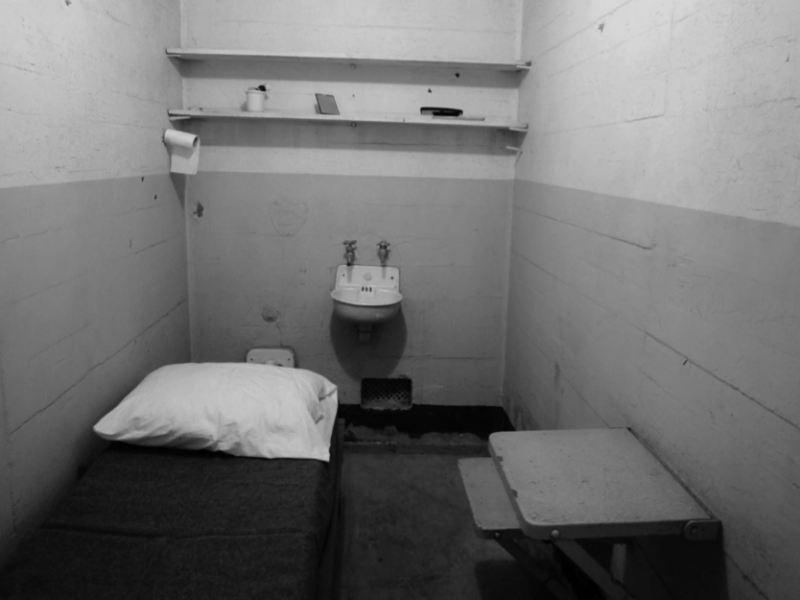
Sostre v. McGinnis, 334 F.2d 906 (1964)
SOSTRE v. McGINNIS 334 F.2d 906 (1964) HAYS, Circuit Judge: This is an action brought under 28 U. S.C. § 1343 and 42 U.S.C. § 1983 by the appellants “in behalf of themselves and all others similarly situated.” Plaintiffs are inmates of Attica State Prison at Attica, New York. Defendants are the Commissioner of Correction of the State of New York and the Warden of Attica State Prison. Plaintiffs allege that they are “members” of the Islamic religion, known as Muslims, and followers of the sect led by the Honorable Elijah Muhammad. They complain that they have been denied certain…
Sostre v. Rockefeller, 312 F. Supp. 863 (1970)
312 F. Supp. 863 (1970) Martin SOSTRE, Plaintiff, v. Nelson A. ROCKEFELLER, Paul D. McGinnis, Vincent Mancusi and Harold W. Follette, Defendants. No. 68 Civ. 4058.United States District Court, S. D. New York. OPINION FINDINGS OF FACT, CONCLUSIONS OF LAW MOTLEY, District Judge. This is a civil rights action, 42 U.S.C. § 1983, 28 U.S.C. § 1343(3), brought by plaintiff, Martin Sostre, an “Afro-American citizen of the United States” and resident of Green Haven Prison against the Governor of New York, the Commissioner of Corrections and the Wardens of two New York State prisons.[1] Mr. Sostre is no stranger to…

Kotch v. Board of River Port Pilot Comm’rs, 330 U.S. 552 (1947)
Holding: Considering the entirely unique institution of pilotage in the light of its history in Louisiana and elsewhere, the pilotage law as so administered does not violate the equal protection clause of the Fourteenth Amendment. (Pp. 330 U. S. 553-564.) 2. The Federal Constitution does not require a state governor, or subordinates responsible to him and removable by him for cause, to select state public servants by competitive tests or by any other particular method of selection. (Pp. 330 U. S. 563-564.) 3. The method adopted by Louisiana for the selection of pilots is not without relation to the objective…

Shelley v. Kraemer, 334 U.S. 1 (1948)
Decided May 3, 1948 CERTIORARI TO THE SUPREME COURT OF MISSOURI MR. CHIEF JUSTICE VINSON delivered the opinion of the Court. These cases present for our consideration questions relating to the validity of court enforcement of private agreements, generally described as restrictive covenants, which have as their purpose the exclusion of persons of designated race or color from the ownership or occupancy of real property. Basic constitutional issues of obvious importance have been raised. The first of these cases comes to this Court on certiorari to the Supreme Court of Missouri. On February 16, 1911, thirty out of a total…
Missouri ex rel. Gaines v. Canada, 305 U.S. 337 (1938)
HOLDING: When the state provides legal training, it must provide it to every qualified person to satisfy equal protection. It can neither send them to other states, nor condition that training for one group of people, such as African-Americans, on levels of demand from that group. Decided December 12, 1938 CERTIORARI TO THE SUPREME COURT OF MISSOURI Syllabus 1. The State of Missouri provides separate schools and universities for whites and negroes. At the state university, attended by whites, there is a course in law; at the Lincoln University, attended by negroes, there is as yet none, but it is the…
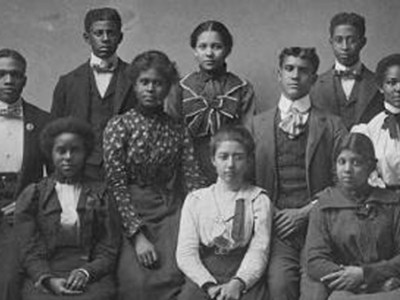
Berea College v. Kentucky, 211 U.S. 45 (1908)
Decided November 9, 1908 ERROR TO THE COURT OF APPEALS OF THE STATE OF KENTUCKY Syllabus This Court will not disturb the judgment of a state court resting on federal and nonfederal grounds if the latter are sufficient to sustain the decision. The state court determines the extent and limitations of powers conferred by the state on its corporations. A corporation is not entitled to all the immunities to which individuals are entitled, and a state may withhold from its corporations privileges and powers of which it cannot constitutionally deprive individuals. A state statute limiting the powers of corporations and individuals…
Cumming v. Richmond County Board of Education, 175 U.S. 528 (1899)
Holding: Georgia did not violate the Fourteenth Amendment by using tax money to fund a high school for white women without providing tax money to pay for a high school for students of color. Ruling: Unequal use of taxes, made on a reasonable basis, is not a violation of the Fourteenth Amendment Decided December 18, 1899 ERROR TO THE SUPERIOR COURT OF RICHMOND COUNTY, GEORGIA MR. JUSTICE HARLAN, after stating the facts as above, delivered the opinion of the Court. (Page 175 U. S. 542) This writ of error brings up for review a final order made in the Superior Court of…
Plessy v. Ferguson, 163 U.S. 537 (1896)
Holding: So long as the facilities were equal, facilities separated on racial lines satisfied the 14th Amendment. Result: Apartheid (Segregation) becomes an institution supported by the full force of the law. Decided May 18, 1896 ERROR TO THE SUPREME COURT OF THE STATE OF LOUISIANA Syllabus The statute of Louisiana, acts of 1890, c. 111, requiring railway companies carrying passengers in their coaches in that State, to provide equal, but separate, accommodations for the white and colored races, by providing two or more passenger coaches for each passenger train, or by dividing the passenger coaches by a partition so as to…
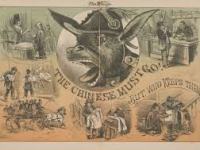
Yick Wo v. Hopkins, 118 U.S. 356 (1886)
Holding: An ordinance that was neutral on its face was over-turned because, in application, it allowed for arbitrary use of discretion that caused the law to be discriminatorily applied against Chinese people. Result: The protections of the Fourteenth Amendement are extended to all people, including non-citizens of the United States who’s rights are protected by treaty. Jurisprudence: Critical Legal Studies Decided May 10, 1886 APPEAL FROM THE CIRCUIT COURT OF THE UNITED STATES FOR THE DISTRICT OF CALIFORNIA Syllabus The following facts were also admitted on the record: that petitioner is a native of China and came to California in 1861, and…
Santa Clara County v. Southern Pacific R. Co., 118 U.S. 394 (1886)
Decided May 10, 1886 ERROR TO THE CIRCUIT COURT OF THE UNITED STATES FOR THE DISTRICT OF CALIFORNIA Syllabus The defendant Corporations are persons within the intent of the clause in section 1 of the Fourteenth Amendment to the Constitution of the United (Page 118 U. S. 395) States, which forbids a state to deny to any person within its jurisdiction the equal protection of the laws. […] One of the points made and discussed at length in the brief of counsel for defendants in error was that “corporations are persons within the meaning of the Fourteenth Amendment to the Constitution…
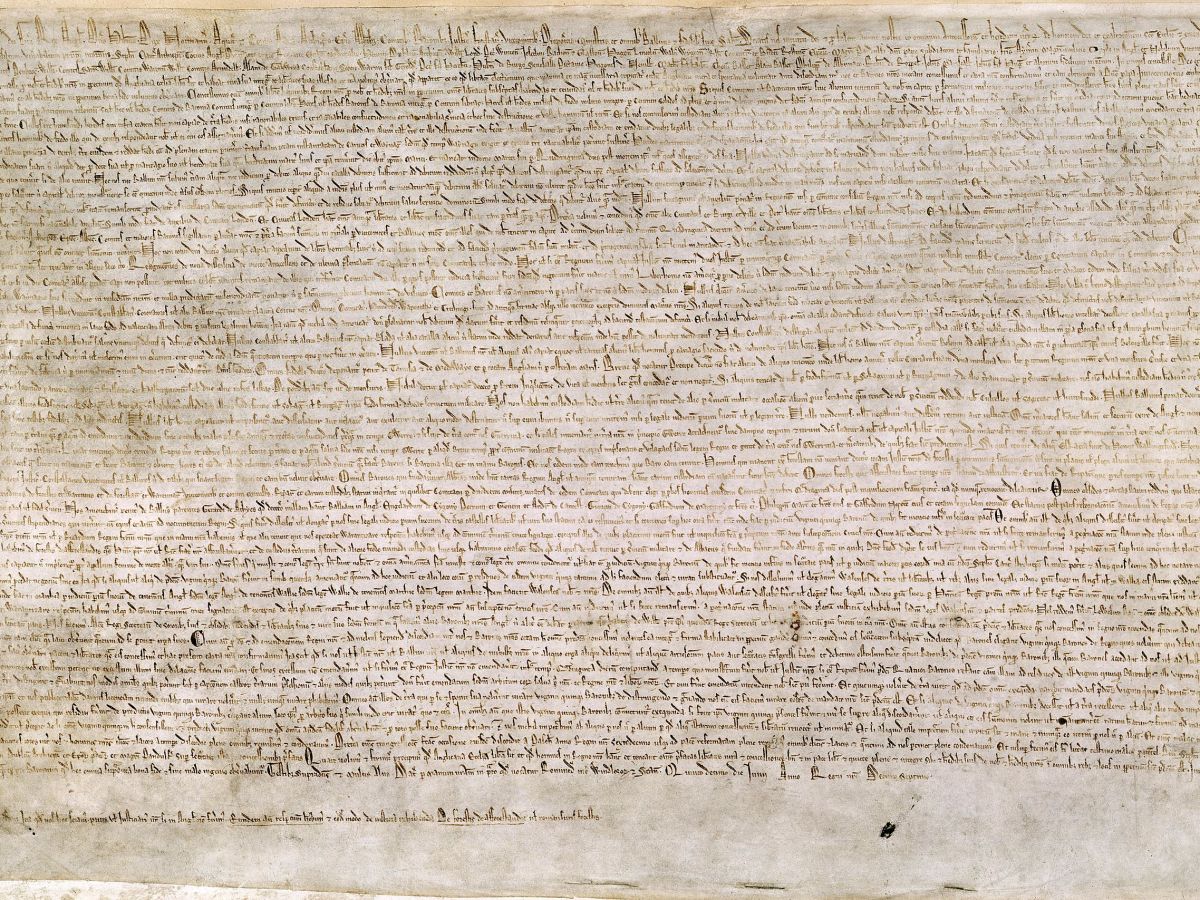
Clause 39, Magna Carta
Clause 39 of Magna Carta provided: “No free man shall be seized or imprisoned, or stripped of his rights or possessions, or outlawed or exiled, or deprived of his standing in any other way, nor will we proceed with force against him, or send others to do so, except by the lawful judgment of his equals or by the law of the land.” The phrase “due process of law” first appeared in a statutory rendition of Magna Carta in 1354 during the reign of Edward III of England, as follows: “No man of what state or condition he be,…

Railway Express Agency, Inc. v. New York, 336 U.S. 106 (1949)
Decided January 31, 1949 APPEAL FROM THE COURT OF APPEALS OF NEW YORK Syllabus A New York City traffic regulation forbids the operation of any advertising vehicle on the streets, but excepts vehicles which have upon them business notices or advertisements of the products of the owner and which are not used merely or mainly for advertising. An express company, which sold space on the exterior sides of its trucks for advertising and which operated such trucks on the streets, was convicted and fined for violating the ordinance. Upon review here of the state court judgment, held: 1. The regulation…
Strauder v. West Virginia, 100 U.S. 303 (1880)
Holding: State law barring African-American men from jury service violated the Equal Protection Clause of the Fourteenth Amendment Result: The Fourteenth Amendment means that states cannot bar African-American men from serving on juries on the basis of their race. ERROR TO THE SUPREME COURT OF APPEALS OF THE STATE OF WEST VIRGINIA Syllabus 1. The Fourteenth Amendment of the Constitution of the United States considered, and held to be one of a series of constitutional provisions having a common purpose, namely to secure to a recently emancipated race, which had been held in slavery through many generations, all the civil rights that the…
Civil Rights Cases, 109 U.S. 3 (1883)
Decided October 16th, 1888 ON CERTIFICATE OF DIVISION FROM THE CIRCUIT COURT OF THE UNITED STATES FOR THE DISTRICT OF KANSAS Syllabus 1. The 1st and 2d sections of the Civil Rights Act passed March 1st, 1876, are unconstitutional enactments as applied to the several States, not being authorized either by the XIIIth or XIVth Amendments of the Constitution. 2. The XIVth Amendment is prohibitory upon the States only, and the legislation authorized to be adopted by Congress for enforcing it is not direct legislation on the matters respecting which the States are prohibited from making or enforcing certain laws, or…

The Thirteenth Amendment
“1. Neither slavery nor involuntary servitude, except as a punishment for crime, whereof the party shall have been duly convicted, shall exist within the United States or any place subject to their jurisdiction.” “2. Congress shall have power to enforce this article by appropriate legislation.” Interpretation from the Majority Opinion in the Slaughterhouse Cases, 83 U.S. 36 (1872): In that struggle, slavery, as a, legalized social relation, perished. It perished as a necessity of the bitterness and force of the conflict. When the armies of freedom found themselves upon the soil of slavery, they could do nothing less than free…
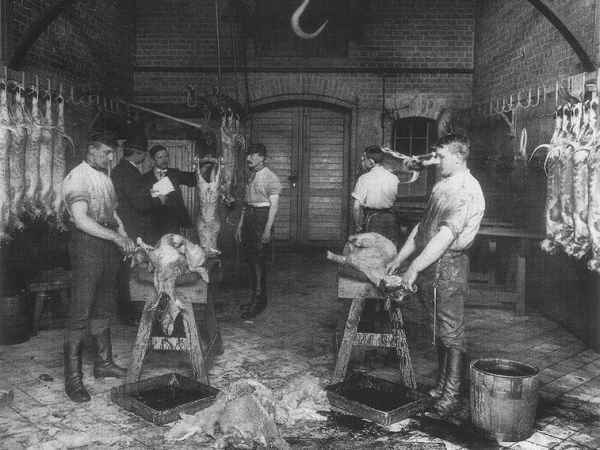
Slaughterhouse Cases, 83 U.S. 36 (1872)
Holding: The grant of exclusive right or privilege within the power of the state legislatures is unaffected by the Constitution of the United States’ adoption of the thirteenth and fourteenth articles of amendment. The Thirteenth Amendment abolishes slavery, only. Privileges and immunities of the Fourteenth Amendment do not hand over control over all civil rights from the states to the federal government. Result: The Louisanna Act that created a corporation and gave it monopoly power for butchery did not violate the rights of other butchers. In the first case where the Supreme Court was called upon to interpret the Reconstruction Amendments, in…
Bradwell v. The State, 83 U.S. 16 Wall. 130 130 (1872)
HOLDING: The right to obtain a license to practice law in state court is not protected under the Fourteenth Amendment. Result: Illinois’ refusal to grant a woman a license to practice law in the courts of that state on the ground that females are not eligible under the laws of that state is not violative of federal constitutional law. Jurisprudential Basis: Originalism, Textualism, and Natural Law IN ERROR TO THE SUPREME COURT OF THE STATE OF ILLINOIS Syllabus 1. The Supreme Court of Illinois having refused to grant to a woman a license to practice law in the courts of that state,…
Session 2: What is Equality?
Materials for Session 2
Fifth Amendment
No person shall be held to answer for a capital, or otherwise infamous crime, unless on a presentment or indictment of a Grand Jury, except in cases arising in the land or naval forces, or in the Militia, when in actual service in time of War or public danger; nor shall any person be subject for the same offence to be twice put in jeopardy of life or limb; nor shall be compelled in any criminal case to be a witness against himself, nor be deprived of life, liberty, or property, without due process of law; nor shall private property…
Fourteenth Amendment
SECTION 1 All persons born or naturalized in the United States, and subject to the jurisdiction thereof, are citizens of the United States and of the State wherein they reside. No State shall make or enforce any law which shall abridge the privileges or immunities of citizens of the United States; nor shall any State deprive any person of life, liberty, or property, without due process of law; nor deny to any person within its jurisdiction the equal protection of the laws. SECTION 2 Representatives shall be apportioned among the several States according to their respective numbers, counting the…
Dred Scott v. Sandford, 60 U.S. 393 (1857)
Dred Scott was born into slavery and was the slave of an army surgeon, Dr. John Emerson. Scott had lived as Dr. Emerson’s slave on military bases in the free state of Illinois and in Wisconsin Territory, and finally in Missouri. After Emerson’s death in 1843, Scott sued for freedom from slavery for himself and his wife During this time, the United States was expanding to include additional states and territories. This expansion heightened the conflict around the continued practice of slavery as states differed on the legitimacy of the institution. As the country expanded, the issue of slavery developed into a…
Session 1: Who are we the people?
For the purposes of the U.S. Constitution, the word “people” has been a much contested legal term of art. It is an analytic placeholder for a concept that many Americans have imagined, envisioned, and dreamed of but that the law, as a formal matter, has yet to fully grasp. In this session, we explore the contests around this term as an introduction to some of the most important debates in U.S Constitutional Law and jurisprudence. We start with Martin Luther King’s famous “I have a dream” speech, as a clear example of how the American dream was not exported from…
Constitution of the United States of America (FULL TEXT)
We the People of the United States, in Order to form a more perfect Union, establish Justice, insure domestic Tranquility, provide for the common defence, promote the general Welfare, and secure the Blessings of Liberty to ourselves and our Posterity, do ordain and establish this Constitution for the United States of America. Article. I. Section. 1. All legislative Powers herein granted shall be vested in a Congress of the United States, which shall consist of a Senate and House of Representatives. Section. 2. The House of Representatives shall be composed of Members chosen every second Year by the People of…
 Informed Citizens. Accountable Power.