Who are “we” the People?
Agenda:
-
- Preliminary Matters (25 minutes)
-
-
- Administrative Matters (9 minutes)
- Finalizing Course Time and Breaks (3 minutes)
- Grading Scheme (2 minutes)
- Website (2 minutes)
- American Constitution Society Abroad (2 minutes)
- Introductions (16 minutes)
- Instructor (1 minute)
- Course (5 minutes)
- Reading American Cases: Why caselaw? (5 minutes)
- Questions (5 minutes)
- Administrative Matters (9 minutes)
-
-
- Getting to Know the Subject-Matter ( 20 minutes):
-
-
- Situating the American Legal System (10 minutes)
- Nature and Authority of the U.S. Constitution (10 minutes)
-
-
- Getting Started (45 minutes):
Assigned Materials:
Complete:
View:
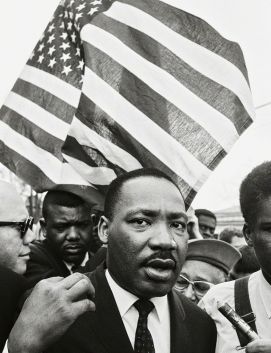
- Martin Luther King, Jr., I Have a Dream (August 28, 1963)
- Fannie Lou Hammer, Congressional Testimony
Read:
- CASE OVERVIEW: Dred Scott v. Sandford, 60 U.S. (19 How.) 393 (1857)
- EXCERPT: Alexis de Tocqueville, Democracy in America (1840)
- Amy, Sturgis, Liberty in Perfection: Freedom in Native American Thought, Foundation for Economic Education (Sept. 1, 1999)
Questions to Consider:
- What is freedom?
- What does the American idea of freedom have in common with any European equivalent?
- What is different about the American understanding of freedom?
- Where do we source the American understanding of freedom?
- What are the sources of American culture?
- What struggles or contests defined the American conception of personhood?
- How did these struggles cause American tradition to diverge from European and other ancestries?
- What does the Preamble of the American Constitution set out to achieve?
- How do African-American and Native American struggles interpret the purpose of this preamble?
- How does the American tradition move from Dred Scott to Martin Luther King Jr., Fannie Lou Hammer, and Barack Obama?
- How does the nation transition from the vision of Barack Obama to the ideologies of Donald Trump?
- Which vision is “more” defining of America’s history and its “people”?
- Who are “we” the people?
OPTIONAL Supplementary Materials:
Reading:
Legal Materials:
- LEGISLATION: Missouri Compromise of 1820
Historical Literature:
- EXCERPT: Frederick Douglass, “What to the Slave Is the Fourth of July?” (July 5, 1852)
- Alexis de Tocqueville, Democracy in America
- Thomas Jefferson, Notes on the State of Virginia (1800s)
- Frederick Douglass, My Bondage and Freedom (1855)
- Sojourner Truth, The Narrative of Sojourner Truth (1850)
- W.E.B. Du Bois, The Souls of Black Folks (1903)
- Booker T. Washington, Up From Slavery: An Autobiography (1901)
Contemporary Scholarship:
- EXCERPT: Chapter 1: Grant Gilmore, The Ages of American Law (1977)
- Sanford Levinson, Reconsidering the Syllabus in “Constitutional Law”, 17 Yale Law Journal FORUM (May 16, 2008).
- Native America, PBS (2018) [Documentary Series] (Particularly Episode 2)
Listening:
Speeches:
Music:
- Native American Healer Songs
- Slave Spirituals:
- Jazz:
- Live Performance: Billie Holiday “Strange Fruit” Live 1959
- Live Performance: Duke Ellington
- Live Performance: John Coltrane
- Soul:
- Rap:
- Contemporary Music:
Viewing:
Visual Arts:
 Informed Citizens. Accountable Power.